Partnership-led growth to be spotlighted at Indaba

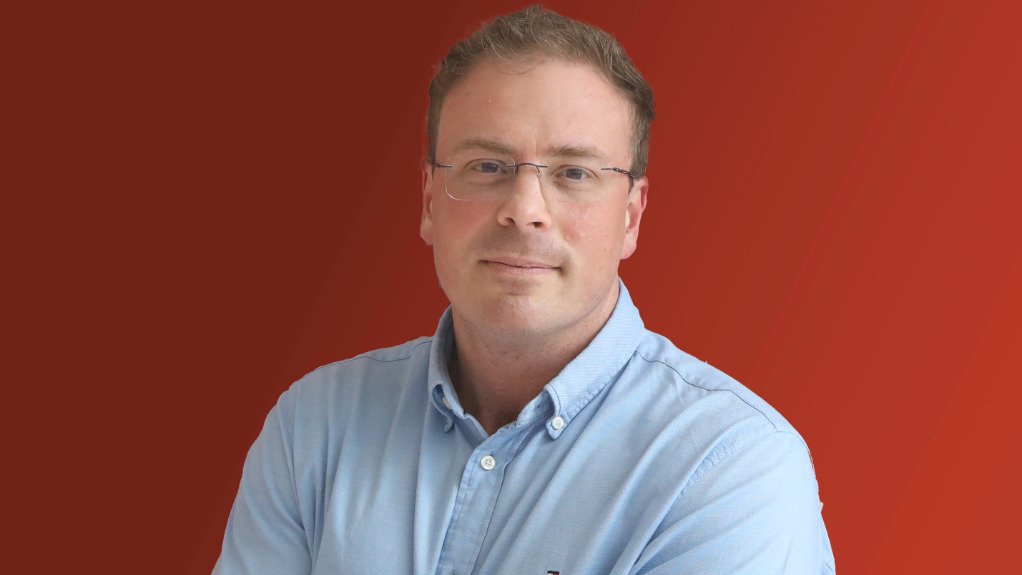
RUAN NOTHNAGEL The Mining Indaba is a critical platform to demonstrate how partnership-led intervention improve certainty for bulk commodity producers


Diversified mining group Menar’s presence at the Investing in African Mining Indaba 2026 is an opportunity to reinforce its message that coordinated partnerships across South Africa’s resources, energy, logistics and regulatory systems are now essential to restoring stability and unlocking new project investment from local and international businesses and funding institutions.
This aligns with the theme of this year’s Indaba of Stronger together: Progress through partnerships.
Prosperous and sustainable business in South Africa is as strong as its weakest link; the most critical links being the cost and reliability of energy and logistics, the effectiveness and efficiency of the regulatory environment and meaningful engagement with affected communities and stakeholders.
During the Indaba, Menar is expected to outline how collaborative models with State-owned freight and logistics company Transnet, State-owned power utility Eskom, private logistics operators and host communities are starting to yield structural improvements that can strengthen the mining industry’s long-term competitiveness.
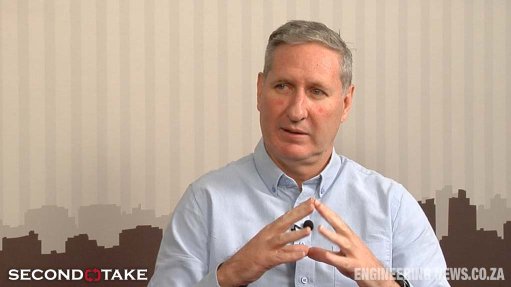
Menar views the Indaba as a critical platform to demonstrate how partnership-led intervention, particularly in rail, power, regulatory reform and community development, can reduce operational risk and improve certainty for bulk commodity producers, says Menar chief commercial officer Ruan Nothnagel.
He points to Transnet’s gradual operational recovery and the introduction of the Transnet Infrastructure Manager (TRIM) scheme as a turning point in efforts to stabilise rail performance.
With Menar being one of 11 companies granted access under TRIM, Nothnagel says the reform is restoring some predictability and reliability to South Africa’s constrained bulk corridors. This simple change immediately translates into more South African jobs being created at the mines – benefiting local suppliers and logistics personnel who will be trained and employed.
Nothnagel adds that similar principles could support energy security and environmental sustainability by allowing private participation in new-build generation with the latest carbon- capture technology. He suggests that Eskom could ease future capacity constraints and the impact on the environment. Cheap, consistent and reliable energy translates directly to GDP growth.
“The aim is not to replace government as the main custodian of power generation, but to ensure that we have enough environmentally friendly capacity to meet all our energy needs in future,” he says.
Nothnagel further highlights the importance of resolving rising electricity tariffs, which have significantly impacted South Africa’s ferroalloys producers.
He notes that industry-led discussions with Eskom and government remain critical for ensuring the survival of downstream users and to secure the competitiveness and longevity of South African beneficiation.
Critical Minerals Drive, Local Partnerships
With critical minerals expected to anchor this year’s Indaba keynote discussions, Menar highlights its growing exposure to the manganese value chain.
The company’s joint venture with diversified natural resources producer ERG Africa to develop the large-scale underground Kongoni manganese resource, in the Northern Cape, aligns with the Department of Mineral and Petroleum Resources’ Critical Minerals and Metals Strategy, which identifies manganese and iron-ore as high-criticality inputs for global green technologies.
Further integration was achieved in 2025 when Khwelamet – a subsidiary of Khwela Capital and jointly owned by Menar Capital and Ntiso Investment Holdings – finalised its acquisition of Samancor’s Metalloys manganese alloy complex.
This transaction of securing the world’s largest single ferro-manganese smelting complex establishes a platform for a vertically integrated manganese business capable of leveraging extraction, beneficiation and smelting synergies, thereby allowing South Africa to be one of the largest exporters of ferro-manganese.
“The only outstanding requirement is for Eskom to come to the party with regards to an electricity price that is competitive with China – the world’s current leader in ferro-manganese production,” says Nothnagel.
Meanwhile, he says partnerships with host communities remain a central pillar of Menar’s operational model through which local enterprises are actively integrated into supply chains and provided with procurement opportunities.
At the Indaba, Menar will also outline its skills development footprint through Kangra’s Cadet Programme, implemented under its social and labour plan (SLP), which trains youth from surrounding areas in underground mining competencies, including roof bolting, electrical work and machinery operation.
Canyon Coal’s SLP initiatives include learnerships, bursaries, internships and Mining Qualifications Authority-accredited equipment operator training, with several participants transitioning into full-time articulated dump truck operator roles at Canyon Coal’s Khanye Colliery.
Logistics reform will also feature prominently in Menar’s Mining Indaba engagements; beyond TRIM, the manganese export capacity allocation programme and the appointment of the first private operator at the Port of Richards Bay’s container terminal are expected to improve manganese throughput and create greater reliability across the export system.
“These initiatives create a more predictable and stable cost and operating environment for exporters,” notes Nothnagel.
Reflecting on Menar’s expansion across South Africa, Nothnagel notes that the company’s success in the resources sector has resulted from consistent and proactive engagement with all stakeholders. This has been fundamental to reducing project risk.
Through these partnership-driven interventions, Menar argues that collaborative frameworks are no longer optional but essential for strengthening South Africa’s mining sector and securing sustainable growth across the value chain.
Article Enquiry
Email Article
Save Article
Feedback
To advertise email advertising@creamermedia.co.za or click here

Projects
Latest Multimedia


Showroom
North Ridge Pumps is an independent manufacturer of pumps. We have a proven track record for product support and customer service throughout the...
VISIT SHOWROOM
ATI systems comprises five divisions: electrical assemblies, drives and controls, feedback sensors, enclosures, and strip guiding.
VISIT SHOWROOM
Press Office
Announcements
What's On
Subscribe to improve your user experience...
Option 1 (equivalent of R125 a month):
Receive a weekly copy of Creamer Media's Engineering News & Mining Weekly magazine
(print copy for those in South Africa and e-magazine for those outside of South Africa)
Receive daily email newsletters
Access to full search results
Access archive of magazine back copies
Access to Projects in Progress
Access to ONE Research Report of your choice in PDF format
Option 2 (equivalent of R375 a month):
All benefits from Option 1
PLUS
Access to Creamer Media's Research Channel Africa for ALL Research Reports, in PDF format, on various industrial and mining sectors
including Electricity; Water; Energy Transition; Hydrogen; Roads, Rail and Ports; Coal; Gold; Platinum; Battery Metals; etc.
Already a subscriber?
Forgotten your password?
Receive weekly copy of Creamer Media's Engineering News & Mining Weekly magazine (print copy for those in South Africa and e-magazine for those outside of South Africa)
➕
Recieve daily email newsletters
➕
Access to full search results
➕
Access archive of magazine back copies
➕
Access to Projects in Progress
➕
Access to ONE Research Report of your choice in PDF format
RESEARCH CHANNEL AFRICA
R4500 (equivalent of R375 a month)
SUBSCRIBEAll benefits from Option 1
➕
Access to Creamer Media's Research Channel Africa for ALL Research Reports on various industrial and mining sectors, in PDF format, including on:
Electricity
➕
Water
➕
Energy Transition
➕
Hydrogen
➕
Roads, Rail and Ports
➕
Coal
➕
Gold
➕
Platinum
➕
Battery Metals
➕
etc.
Receive all benefits from Option 1 or Option 2 delivered to numerous people at your company
➕
Multiple User names and Passwords for simultaneous log-ins
➕
Intranet integration access to all in your organisation